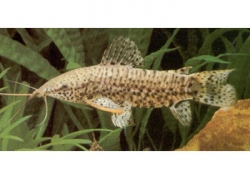
Description
Overview
| Synonyms | Callichthys thoracatus, Hoplosternum thoracatum |
| Distribution | Bolivia, Brazil, Colombia, Ecuador, French Guiana, Guyana, Peru, Suriname, and Venezuela. |
| Maximum Size | 15cm+ (6″+) |
| Temperature | 18-28°C |
| Water Parameters | Will acclimatise to a wide range of conditions. pH: 6.0-8.0, KH: up to 20 degrees. |
| Compatibility | Community with no small fish |
| Lighting | Low |
| Sexual Dimorphism | Mature males develop a thick orange first pectoral fin ray. Mature females fuller bodied. |
| Feeding | Catfish pellets, granules, flake, frozen and live foods |
Description
Care
Feeding
Sinking catfish pellets/granules/tablets. Frozen foods such as mosquito larvae, brineshrimp, Mysis shrimp, chopped krill etc. Some specimens may eat flake/crisps, but sinking foods should be offered primarily.
Breeding
Hoplo Catfish form a strong pair bond. At the first signs of spawning, when the fish seem to have paired off and the male is displaying a purpley-blue belly, it would be best to move any other Hoplos to another aquarium, leaving just the male-female pair. (The female may well also need to be moved away from the male later on). A calm area should be created within the aquarium, which does not show turbulence at the surface. This is the likely site where the male will choose to construct his bubble nest. Usually triggered by a cool partial water change, he will build this nest at the waters surface, anchoring it to floating plants (a small piece of polystyrene has been known to act as a good substitute). In order to stabilise the nest further, the male cuts pieces of plant from elsewhere in the tank and adds them to the nest. He is able to do this with the use of his sharp pectoral fins, and this process may take several days. When the nest is ready, the male will pursue the female and if she accepts him they will swim up to the bubble nest and adopt the T-position (also seen with Corydoras spawnings). The female deposits her adhesive eggs (a small number at a time) into the nest which the male fertilises. This action is repeated until the female is depleted of eggs. The number of eggs will depend on the size of the female but expect upwards of 150. A good sized female will produce 500+. The male then begins furiously guarding the nest against any predators (which will include nets and hands!), and it is at this point the female must be removed for her own safety; male Hoplos have been known to kill their mate in their over-zealous defending of the eggs. The male will make any necessary repairs to the nest as and when required, retrieving any eggs that fall, and these can be expected to hatch after 72-96 hours. Once the eggs begin to hatch, it is wise to catch the male and relocate him to another tank as he may start to predate on the fry. The fry will initially take nutrition from their yolk sacs, but should be offered tiny foods, such as microworms, after 24 hours or so.