Care
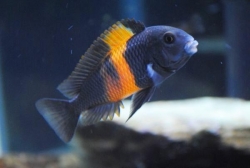
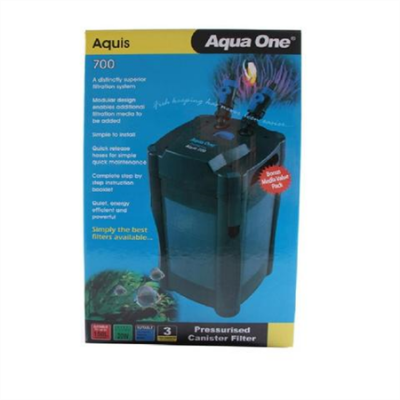
Tropheus sp. ‘bemba” is known from Lake Tanganyika, where it is found amongst the rocky habitat, grazing algae in the sunlit shallows. Currently these fishes are in need of classification and many of the forms are known as Tropheus sp. ‘Black’ or T. sp. ‘Red’ together with their location or common name. As hybridisation may occur, it’s best to keep Tropheus in groups of their own kind and these should be large in number to spread the aggression. Housing 15 or more of these feisty fishes requires a large aquarium and this should be 1.5m or more in length to allow individuals to avoid one another. Smaller groups inevitably dwindle as harassment and bullying proves too much for the females and weaker males. It is important that the entire group is added at the same time to avoid the aggression which would otherwise be directed towards any newcomers. When adding large numbers of fish in this manner, it’s important that the filtration is cycled and capable of handling the waste load. Given the investment involved, the use of a matured filter and bacterial inoculation with products such as Microbe Lift are strongly advised. As always, water quality should be very carefully monitored over the first few weeks. Excellent water quality must be maintained at all times, with partial water changes carried out at least once or twice a week and this may require the addition of buffers to ensure the high pH and carbonate hardness levels required. Strong water movement will ensure high oxygen levels and helps to keep the fish fit and active.
Feeding
A staple diet based on algae such as spirulina is recommended, together with occasional feeds of high-fibre frozen foods such as Daphnia, Mysis and Cyclops. Avoid feeding these fishes too generously. Fine sand substrates may be useful in aiding gut health by providing beneficial indigestible matter.