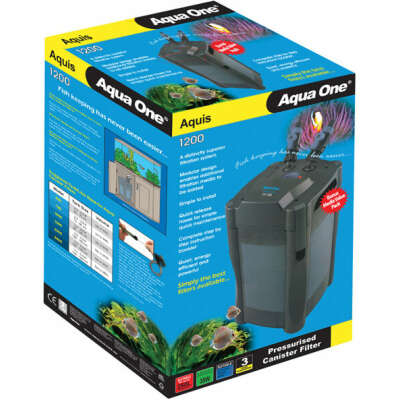
The Parrot Cichlid (Hoplarchus psittacus) is known from the blackwaters of the Negro, Jamari, Preto da Eva, and Urubu rivers in Brazil and the upper Orinoco basin in Venezuela. This is the “true” Parrot Cichlid, and is not to be confused with the man-made hybrid Blood Parrot Cichlid, the parentage of which has nothing to do with this species. These large but delicate fish are not suitable for beginners and require a specialised set of conditions if they are to thrive. The aquarium should be very spacious with warm, soft, acidic water. There should be powerful filtration and the water should be well oxygenated via the use of spraybars and powerheads – this is particularly important at higher temperatures. In the wild, these fish prefer the safety of dimly lit areas amongst vegetation and fallen trees, so this should be replicated as best as possible; aquascaping the aquarium with plenty of bogwood and robust plants such as Microsorum pteropus, Anubias spp. or plastic/silk varieties in order to shade out bright lighting. Avoid delicate plants, as these will be uprooted/eaten. Be sure that any rockwork is very secure, as adult fish can be fairly destructive and like to move things about “falling” rockwork could have disastrous consequences. Heaters can be easily damaged, so ensure that they are fitted with a proper heater guard, or else use a filter with a built-in heater, or place the heater inside a sump. Juvenile Parrot Cichlids can usually be kept together as a group if introduced simultaneously, any minor squabbles being spread throughout the group so that no one fish bears the brunt of it all. However, adults can be rather more cantankerous and somewhat territorial. If a pair forms naturally, and then chooses to spawn, they will become very aggressive towards other fish and as such any tankmates may need to be moved to another aquarium, unless the tank is of XXL proportions with an abundance of visual barriers (and even then, egg-crate may be necessary to separate them). If tankmates are desired, some of the warm water suckermouth catfish (Loricariidae) may be considered; however, do not keep with small fish, as the Parrot Cichlids will consider them food. Partial water changes must be carried out on a very frequent basis, as these fish are extremely sensitive to the build-up of nitrogenous wastes. Ensure that the tank has tight fitting coverslides, as Parrot Cichlids may jump from an open-topped aquarium.
Feeding
Offer a varied diet, fed in small amounts at least 3 times per day e.g. flake, granular foods, and frozen foods such as bloodworm, white mosquito larvae, brineshrimp, Mysis shrimp, chopped krill etc. Adding a vitamin supplement to the foods can be beneficial.